


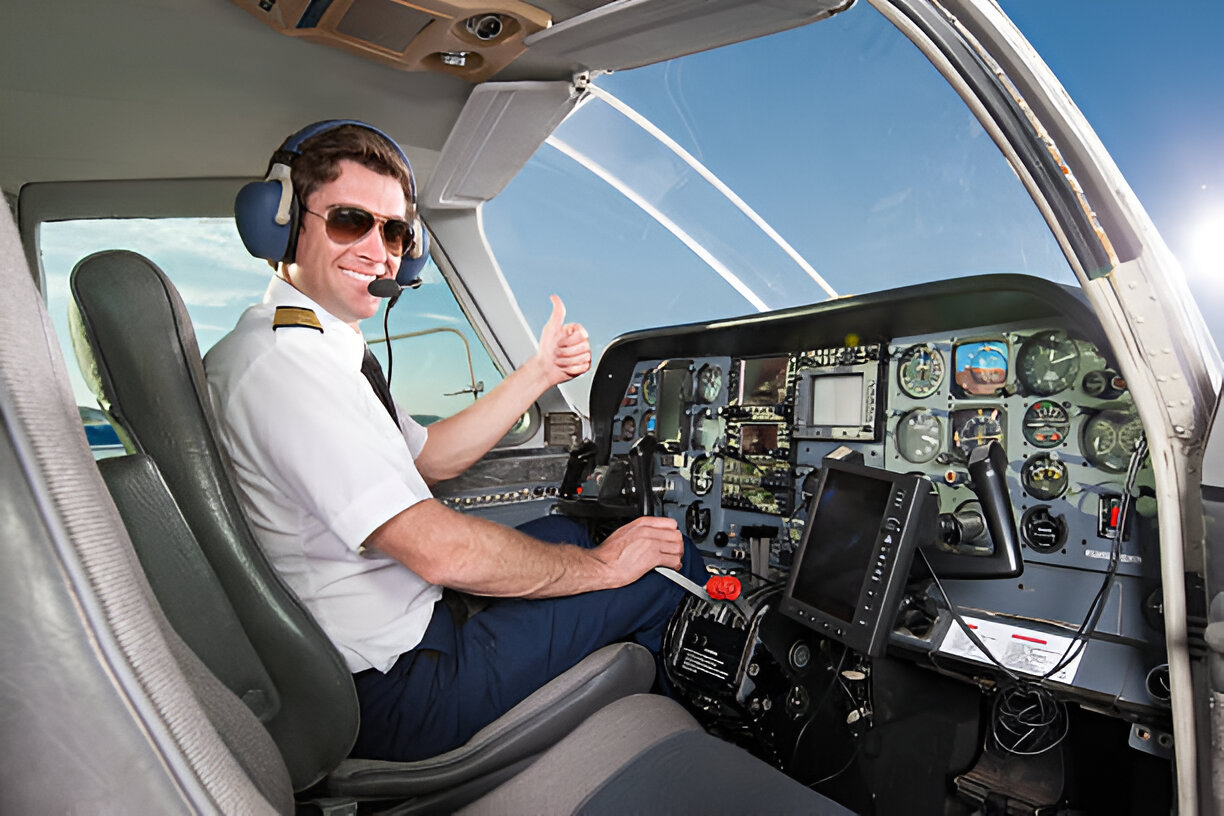
Becoming a pilot requires skill, dedication, and passion, offering both immense responsibility and the thrill of flying. This guide explores the journey from pilot training to career paths, industry advancements, and the resilience of those in the field. Whether you’re aspiring to be a pilot or just curious, find out what it takes to navigate the skies.
Training Ground: Becoming a Pilot
Training to become a pilot is a rigorous process requiring both theoretical education and practical flight experience. It’s built on a foundation of meticulous training, strict regulations, and unwavering dedication. Here’s a breakdown of the steps that every aspiring pilot goes through:
Educational and Professional Requirements
Pilots begin their career with a strong educational foundation. While a college degree in aviation or aerospace may not always be mandatory, it’s highly preferred by many airlines. Along with general academics, candidates must develop strong leadership, problem-solving, and communication skills—capabilities that are critical in high-pressure situations.
Aspiring pilots also need to clear medical fitness assessments to ensure that physical conditions like vision, coordination, and overall health won’t impede their ability to fly safely.
Ground school training is the next step and encompasses learning the fundamentals of aerodynamics, weather, navigation, and aircraft systems. This phase lays the groundwork for earning pilot certifications.
Types of Pilot Licenses
Licenses are the gate to professional flying, escalating in complexity with each step. Here are the key types of pilot licenses and what they enable you to do:
Private Pilot License (PPL)
This is the first milestone for aspiring aviators, allowing individuals to fly single-engine aircraft for personal purposes.
Instrument Rating (IR)
Adding this endorsement allows pilots to fly in poor visibility conditions, such as rain, fog, or clouds, using the aircraft’s instruments.
Commercial Pilot License (CPL)
A CPL enables pilots to fly for compensation, marking their first step toward professional aviation careers. This involves additional training and meeting stringent flight hour requirements.
Airline Transport Pilot License (ATPL)
Required to captain an airliner, the ATPL is the gold standard of pilot certifications, often obtained after years of flying commercial routes as a co-pilot.
Each license represents a new level of competency, helping pilots gradually work toward commanding larger and more complex aircraft.
Navigating the Skies: Post-Training Career Paths
Once trainees earn their wings, it’s time to map their career path. Pilots have exciting choices spanning commercial, private, and military careers, each offering unique responsibilities and benefits.
Commercial Aviation
Commercial aviation is one of the most sought-after avenues. Commercial pilots operate for airlines, charter services, and cargo companies. Attending a flight school, like those in Dallas, can provide the training and skills needed to excel in this exciting field. From flying international jetliners to regional airlines, pilots experience a dynamic and fast-paced work life, often traveling across multiple time zones.
Private Aviation
For those looking to serve elite clientele, private aviation is often a rewarding path. Pilots flying private jets enjoy smaller settings and personalized relationships with passengers. However, schedules can be unpredictable, catering directly to clients’ travel demands.
Military Aviation
Serving as a fighter pilot or transport pilot in the armed forces offers unmatched prestige and adrenaline. Beyond flying missions, military pilots receive unparalleled advanced training. It’s a demanding yet highly respected role.
Each of these paths caters to different lifestyles and ambitions, but no matter the choice, every pilot contributes to the incredible world of aviation.
The Future of Flight: Technological Advancements
The aviation industry is undergoing seismic shifts through innovations in technology. Here’s a glimpse at what the future holds for aspiring and current pilots:
Smarter Aircraft Systems
Modern cockpits are increasingly automated, leveraging sophisticated artificial intelligence and predictive systems to assist pilots in navigation and decision-making. For instance, electronic flight bags (EFBs) have replaced traditional paper charts, streamlining operations.
Enhancing Sustainability
Sustainability is at the forefront of aviation’s evolution. Airlines and manufacturers are working tirelessly to reduce carbon emissions with advancements like fuel-efficient engines and electric aircraft prototypes. Airbus, for example, has committed to launching zero-emission aircraft by 2035.
Simulated Training
Virtual reality (VR) and advanced flight simulators allow pilots to practice emergency procedures under scenarios too risky to replicate in actual airspace. This reduces the cost and environmental impact of training while ensuring safety.
The integration of tech innovations ensures a safer, greener, and more efficient future for flight crews and passengers alike.
Conclusion
Now that we’ve explored the journey of becoming a pilot, it’s clear that it takes dedication, hard work, and a passion for flying. From ground school training to earning certifications and navigating various career paths, pilots have a challenging yet rewarding profession.
