


Collective noun for horses offer a fascinating glimpse into the language used to describe these magnificent animals when they gather in groups. For centuries, horses have been admired for their grace, strength, and vital roles in human history, from farming to warfare. Whether wild or domesticated, these noble beasts are often referred to with unique terms such as “herd,” “band,” or “remuda.”
In this article, we explore the different collective terms for horses, shedding light on their behavior, social structures, and the richness of the English language that captures their essence.
Collective Noun for Horses table from
The English language has a treasure trove of collective nouns when it comes to grouping horses. Each term not only describes the horses’ physical gathering but often reflects their role or behavior. Here’s a detailed list of terms used to define different horse groups:
| Collective Noun | Context / Usage |
|---|---|
| Herd | General term for a group of horses, both wild and domesticated. |
| Band | Group of wild or free-roaming horses, led by a dominant mare. |
| Harem | Group of horses with one stallion and several mares. |
| Team | Working horses, often pulling carriages or plowing fields. |
| String | Group of horses owned or managed by one person, often used for racing or hunting. |
| Stable | A collection of housed horses, usually domesticated. |
| Remuda | Group of spare horses used by cowboys for cattle ranching. |
| Troop | Ceremonial horses or horses used in military parades. |
| Stud | Horses specifically bred for reproductive purposes. |
| Cavalcade | A formal procession of horses, typically seen in royal or ceremonial occasions. |
Detailed Explanations and Examples of Collective Noun for Horses
Collective nouns for horses, such as “herd,” “band,” or “remuda,” describe different groups of horses based on their behavior and context. These terms offer insight into whether horses are wild, domesticated, or part of specific activities like ranching or racing.
Herd of Horses
One of the most common ways to refer to a group of horses is by calling them a herd. This term is versatile and can apply to both wild horses and domesticated horses. In the wild, herds often consist of several mares, their foals, and a dominant stallion. Herds are highly social, exhibiting complex herd behavior and a strong sense of group dynamics.
Example: “The herd of horses galloped across the open field, led by the dominant stallion.”
Band of Horses
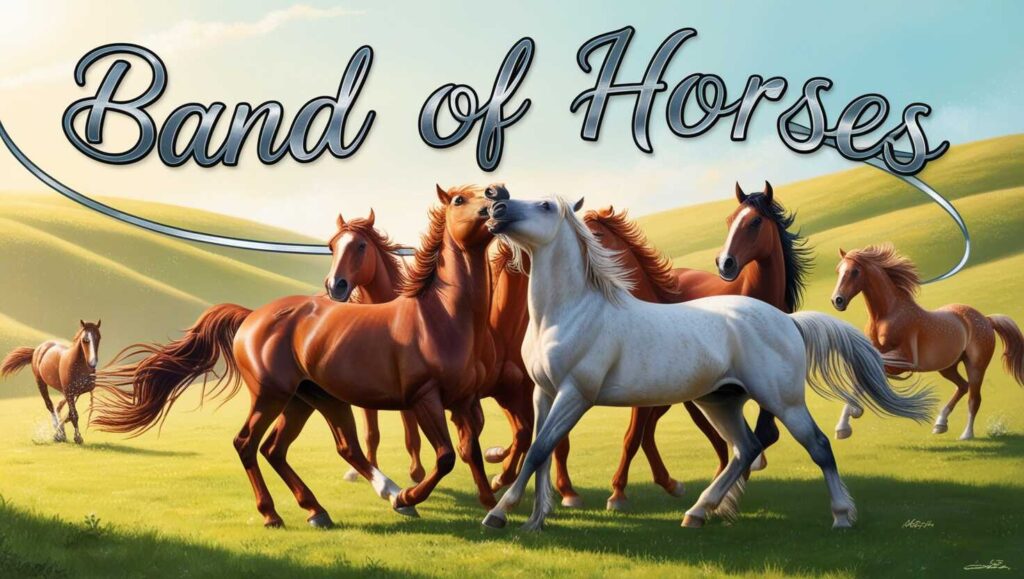
The term band is usually reserved for wild horses, such as mustangs or other feral horse groups. A band typically consists of a stallion, several mares, and their offspring. This group is led by a lead mare, who determines the band’s movements, while the stallion protects the group from predators.
Example: “A band of wild horses roamed the plains, moving in perfect unison.”
Harem of Horses
In wild horse populations, particularly among mustangs, the term harem is used to describe a group led by a dominant stallion and composed of several mares and their offspring. The stallion maintains exclusive breeding rights within his harem, defending it from rival males.
Example: “The stallion watched over his harem of mares, ensuring their safety.”
Team of Horses
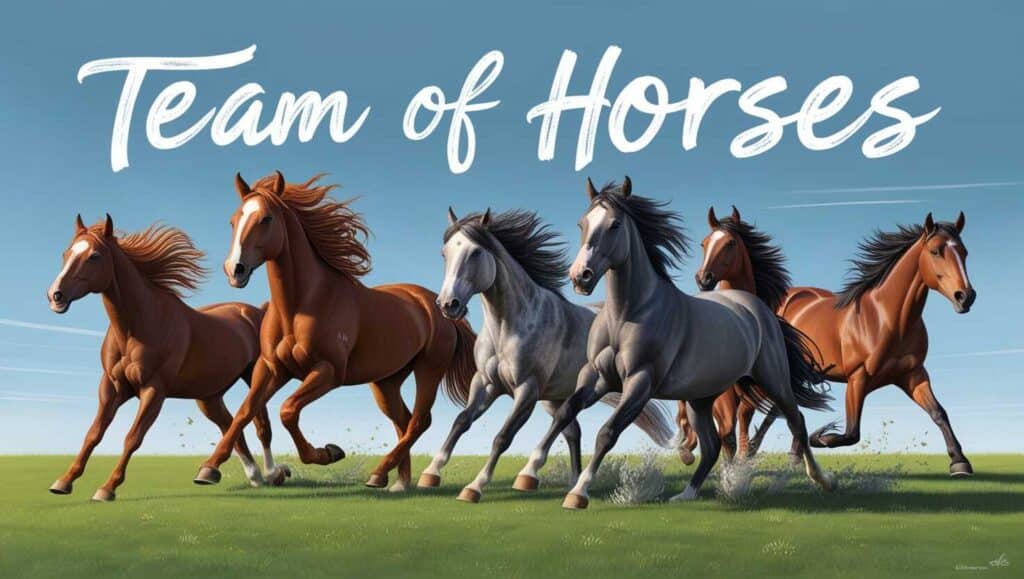
A team of horses refers to horses working together, particularly when pulling a carriage or plowing fields. Draft horses are often harnessed in pairs or larger teams to complete heavy labor. In this context, the term underscores the horses’ working roles and coordinated efforts.
Example: “The team of horses worked tirelessly, pulling the carriage up the steep hill.”
String of Horses
A string of horses refers to a group of horses owned or managed by a single person. This term is especially common in the racing world or among hunting horses. Each horse in the string is carefully trained for specific tasks, whether racing or hunting.
Example: “The jockey managed a string of racehorses, each one meticulously conditioned for competition.”
Stable of Horses

A stable of horses refers to a group of housed equines kept within a horse barn or other equine abode. Stables are typically used for domesticated horses and play a key role in their management, housing, and care.
Example: “The horse owner took pride in her stable of horses, ensuring they were well cared for.”
Remuda of Horses
In the context of cattle ranching, the term remuda refers to a group of spare horses used by cowboys during cattle drives. These horses are rotated so that no single horse becomes too exhausted during long days of riding.
Example: “The cowboys selected fresh mounts from the remuda before heading out for the day’s work.”
Troop of Horses
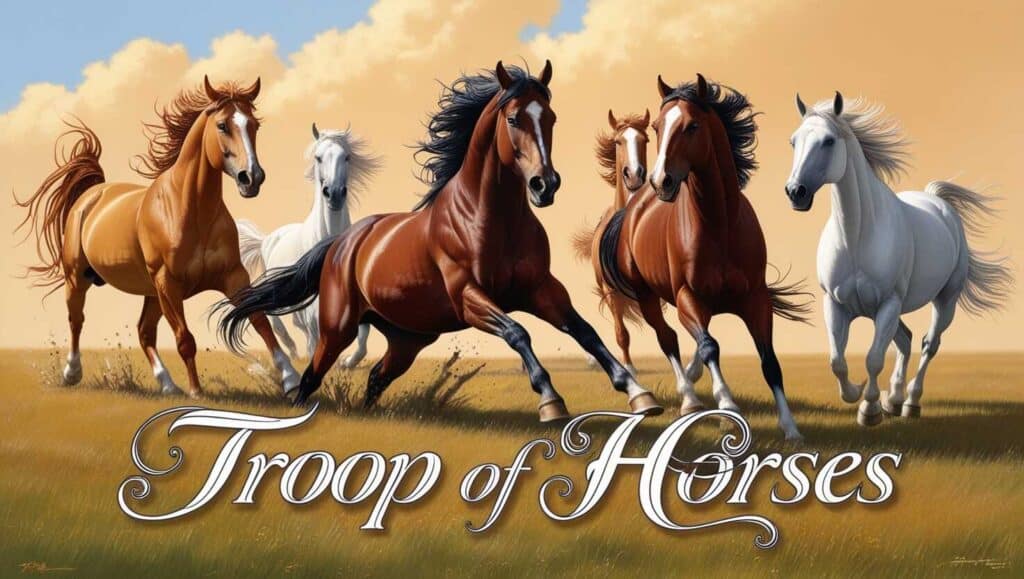
A troop of horses is often associated with cavalry officers or ceremonial horses used in military parades. Historically, troops of horses were an essential part of cavalry units, offering both mobility and power in battle.
Example: “The troop of cavalry horses marched in formation during the royal ceremony.”
Stud of Horses
The term stud refers to a group of horses that are specifically used for breeding. A stud farm is where horse breeding takes place, with stallions selected for their superior genetics to sire the next generation of thoroughbreds or other breeds.
Example: “The stud of horses produced some of the finest racehorses in the country.”
Cavalcade of Horses
A cavalcade is a formal procession of horses, often seen during royal occasions or major events. Cavalcades are highly organized and symbolize both tradition and spectacle.
Example: “A cavalcade of parade horses led the procession during the Trooping the Color ceremony.”
Special Groupings of Horses
Beyond these common terms, there are more specific ways to refer to horses depending on their context or characteristics.
What is a Group of Wild Horses Called?
Wild horses, such as mustangs and other feral horses, are typically referred to as a band or mob. These terms highlight their free-roaming nature and often untamed behavior. Wild horse groups exhibit intricate social structures, with a lead mare at the helm, directing the group’s movements and maintaining order.
What is a Group of Domesticated Horses Called?
We commonly use terms like herd, stable, or team for domesticated horses, which humans manage for farming, racing, or pleasure riding. These horses are typically managed by humans, whether for farming, racing, or pleasure riding. Domesticated horses often exhibit different behavior from their wild counterparts due to training and human interaction.
What is a Group of Female Horses Called?
A group of female horses, particularly in the wild, is often referred to as a harem. In these groups, the dominant mare leads the band, with the stallion serving as protector. The mares are responsible for rearing the foals and making decisions about where to graze and travel.
Table: Collective Nouns for Horses by Context
| Context | Collective Noun |
|---|---|
| Wild Horses | Band, Mob, Harem |
| Domesticated Horses | Herd, Stable, Team |
| Female Horses | Harem |
| Working Horses | Team |
| Racing Horses | String |
| Breeding Horses | Stud |
| Ceremonial Horses | Troop, Cavalcade |
Regional and Historical Variations in collective noun for horses
Interestingly, the terms used to describe groups of horses can vary by region and historical context. In the United States, terms like remuda and string are more common, particularly in the context of ranching. In contrast, in the United Kingdom, herd and troop are more prevalent, reflecting the country’s equestrian traditions.
Historically, the term cavalcade dates back to medieval times, when processions of horses were a symbol of power and nobility. The use of troop for military horses also reflects the important role of cavalry in warfare.
The Symbolism of Horses in Collective Nouns
The various collective terms for horses reflect not just their role in human society but also the deep cultural and symbolic meanings attached to these grand animals. We revere horses for their power, speed, and intelligence, and the terms we use to describe them highlight these qualities.
For example, the word herd suggests the natural world and the horses’ instinctive behavior to stick together for safety. Team highlights the horses’ role as working animals, emphasizing their cooperation and effort. Meanwhile, **stud
points to the importance of horse breeding in maintaining strong bloodlines.
The use of terms like troop and cavalcade speaks to the royal occasions and ceremonial roles that horses have played throughout history. These words evoke images of parade horses and ceremonial horses marching in unison, a testament to the elegance and tradition of horses in formal settings.
Conclusion
The collective nouns we use to describe groups of horses offer a glimpse into the English artistry and the vital roles horses play in our lives. From wild mustangs roaming the plains to racing horses galloping down the track, each collective term tells a unique story about the equine realm.
By understanding these terms and their contexts, we not only appreciate the richness of the English language but also deepen our connection to these impressive beings that have shaped human history for thousands of years. Whether you’re referring to a herd of horses, a team of working horses, or a string of racehorses, each word holds its own special meaning, capturing the essence of these majestic creatures in a way only language can.
