


Collective noun for stars refers to poetic or scientific terms used to describe groups of stars in the night sky. Just as wolves gather in packs and fish swim in schools, stars also have special names when they form patterns or clusters. These collective nouns not only help us describe celestial gatherings, but they also reveal the beauty of the universe. Each noun carries its meaning, rooted in science, mythology, or the wonder humans have always felt while gazing at the night sky. Some of these star groupings are visible to the naked eye, while others require telescopes to fully appreciate.
Stars can form constellations, clusters, or galaxies, each with distinct characteristics. These celestial bodies are spread across the Milky Way and beyond, extending into regions like the Andromeda Galaxy and Virgo Supercluster. People throughout history have admired and named these star formations, which often hold symbolic meanings or serve practical purposes, such as helping travelers navigate the night sky.
Table: Common Collective Noun for Stars
| Collective Noun | Description |
|---|---|
| Constellation | Recognizable star patterns used for navigation and storytelling. |
| Cluster | A gravitationally bound group of stars, such as the Pleiades. |
| Galaxy | A vast system of stars, dust, and planets, like the Milky Way. |
| Nebula | A gas and dust cloud where stars are born. |
| Starfield | A large region of sky with many visible stars. |
| Asterism | An informal star pattern within a constellation, like the Big Dipper. |
| Swarm | A dense group of stars moving together. |
| Supercluster | A collection of galaxies held together by gravity. |
| Sphere | A spherical group of stars, often seen in globular clusters. |
| Arm | A spiral band of stars within a galaxy, like the Milky Way’s arms. |
Detailed Explanations and Examples for Each Collective Noun for Stars
Each collective noun for stars like constellation, cluster, galaxy, and nebula carries unique meaning and reflects how stars are grouped or observed. These terms describe different cosmic arrangements, from recognizable star patterns to vast galaxies and stellar nurseries. Understanding them helps us appreciate the night sky’s structure and beauty.
Constellation
A constellation is a recognizable pattern of stars in the sky, named after animals, objects, or mythological figures. Constellations help astronomers and navigators map the night sky. For example, the Orion constellation, named after a hunter in Greek mythology, is visible in the winter months. Similarly, Ursa Major, also known as the Big Bear, contains the famous Big Dipper, which points toward the North Star. These patterns have been used for centuries by sailors and travelers to navigate their way across land and sea.
Cluster
A cluster is a gravitationally bound group of stars. Open clusters, like the Pleiades (also called the Seven Sisters), contain young stars and are often visible to the naked eye. Globular clusters, such as Omega Centauri, are more densely packed and made up of older stars. Clusters provide a glimpse into stellar evolution, revealing how stars form and change over millions of years. The Pleiades, located in the Taurus constellation, is a popular example often observed by astronomers during star-watching events.
Galaxy
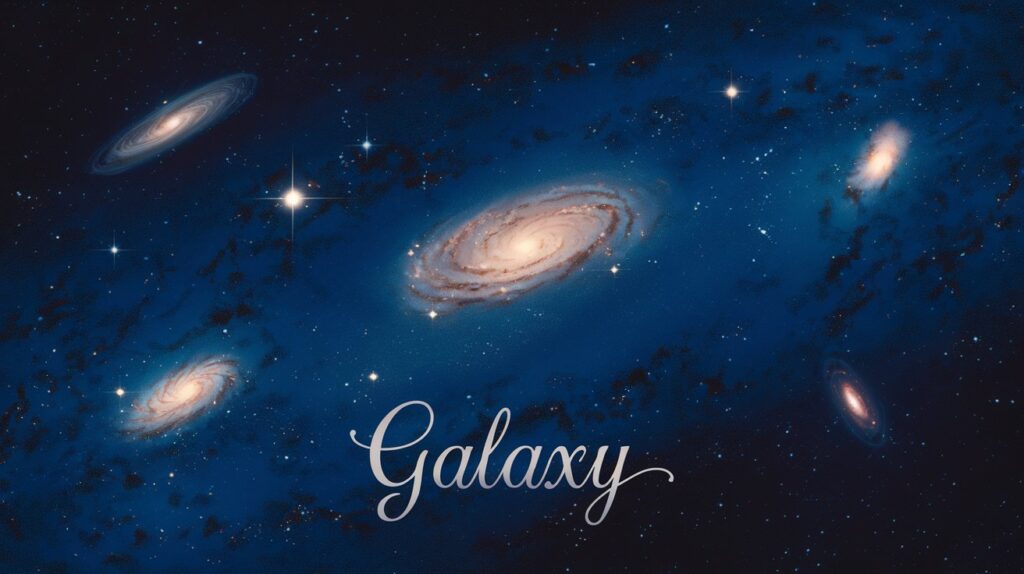
A galaxy is a massive collection of stars, gas, dust, and dark matter, all held together by gravity. Our Milky Way Galaxy contains billions of stars, including the Sun. Another well-known galaxy is the Andromeda Galaxy, the closest spiral galaxy to us, visible with the naked eye under dark skies. Galaxies interact with one another, sometimes merging or colliding, which can trigger bursts of star formation. These vast cosmic cities play a crucial role in shaping the universe and serve as homes for countless planetary systems.
Nebula
A nebula is a cloud of gas and dust where new stars are born. One of the most famous nebulae is the Orion Nebula, located in the Orion constellation, visible even through binoculars. Nebulae like the Horsehead Nebula and Eagle Nebula are popular targets for Astor photographers due to their breathtaking colors and shapes. Some nebulae are stellar nurseries, while others, such as the Cat’s Eye Nebula, are remnants of dying stars. These clouds illustrate the full cycle of star life, from formation to eventual decay.
Starfield
A starfield refers to a section of the sky densely populated with stars. When observed through a telescope, a starfield looks like a glittering sea of stars, especially in areas near the galactic plane of the Milky Way. Star fields offer astronomers an opportunity to study the distribution of stars in specific regions. Stargazers often enjoy scanning star fields for constellations or discovering faint stars hidden in the background.
Asterism
An asterism is a smaller, informal pattern of stars within a constellation. A famous example is the Big Dipper, which is part of the larger Ursa Major constellation. Another example is the Summer Triangle, made up of the bright stars Vega, Deneb, and Altair. While not officially classified as constellations, asterisms are easy to recognize and serve as a helpful guide for finding constellations or celestial objects.
Swarm

A swarm of stars is a dense group of stars that appear to move together in space. These stellar swarms are usually found within star clusters or as remnants of disrupted star clusters. Astronomers use swarms to study how gravity binds stars together. Some star swarms are visible during meteor showers, where the dust from comets burns up in Earth’s atmosphere, creating streaks of light across the sky.
Supercluster
A supercluster is a massive structure composed of multiple galaxies grouped together. The Virgo Supercluster, which contains the Milky Way, is one of the largest known superclusters. Superclusters help scientists understand the large-scale structure of the universe and how matter is distributed throughout space. They are held together by gravity, forming a cosmic web of galaxies spread across unimaginable distances.
Sphere
A sphere refers to a globular-shaped group of stars, often seen in globular clusters. These spherical clusters contain thousands to millions of tightly packed stars. A well-known example is M13, the Great Hercules Cluster, which contains hundreds of thousands of stars in a roughly spherical shape. These star spheres are ancient, with many stars being over 10 billion years old, providing insights into the early history of the universe.
Arm
An arm refers to the spiral structure found within spiral galaxies, such as the Milky Way. The Milky Way has several arms, including the Orion Arm, where our solar system is located. These arms are filled with gas, dust, and young stars, serving as active regions of star formation. The swirling arms of spiral galaxies are some of the most visually stunning features observed in deep-sky astronomy, giving galaxies their iconic shape.
Frequently Asked Questions
Is cluster a collective noun of stars?
Yes, cluster is a collective noun for stars. It refers to a tight grouping of stars bound by gravity, such as the Pleiades or Omega Centauri. These clusters can be open or globular, with stars appearing close together in the night sky.
Is group of stars correct?
Yes, “group of stars” is a correct way to describe multiple stars found close to one another. This term is often used when the exact formation like a cluster or constellation is not specified but still refers to a collective arrangement in space.
How do you say a group of stars?
A group of stars can be called a constellation, cluster, galaxy, or nebula depending on their structure and nature. Each term reflects a different way that stars appear or are connected within the universe.
What is one word for group of stars?
One word for a group of stars is constellation. It describes a recognizable pattern of stars that forms shapes used in navigation and storytelling, like Orion or Ursa Major.
Conclusion
The collective noun for stars connects us to both the scientific and poetic dimensions of the night sky. Whether you’re looking at a constellation that tells a story or a cluster revealing the mysteries of gravity, these terms help us appreciate the cosmos more deeply. From galaxies to nebulae, each celestial grouping provides a glimpse into the vastness and beauty of the universe. These groupings are more than just scientific terms; they are reminders of the human desire to explore, understand, and find meaning in the stars above.
